
Last updated August 25, 2026
Free on-site gate assessment - hinges, posts, and your LiftMaster or Nice gate operator checked before anything is quoted
The assessment is free and the quote is the invoice.
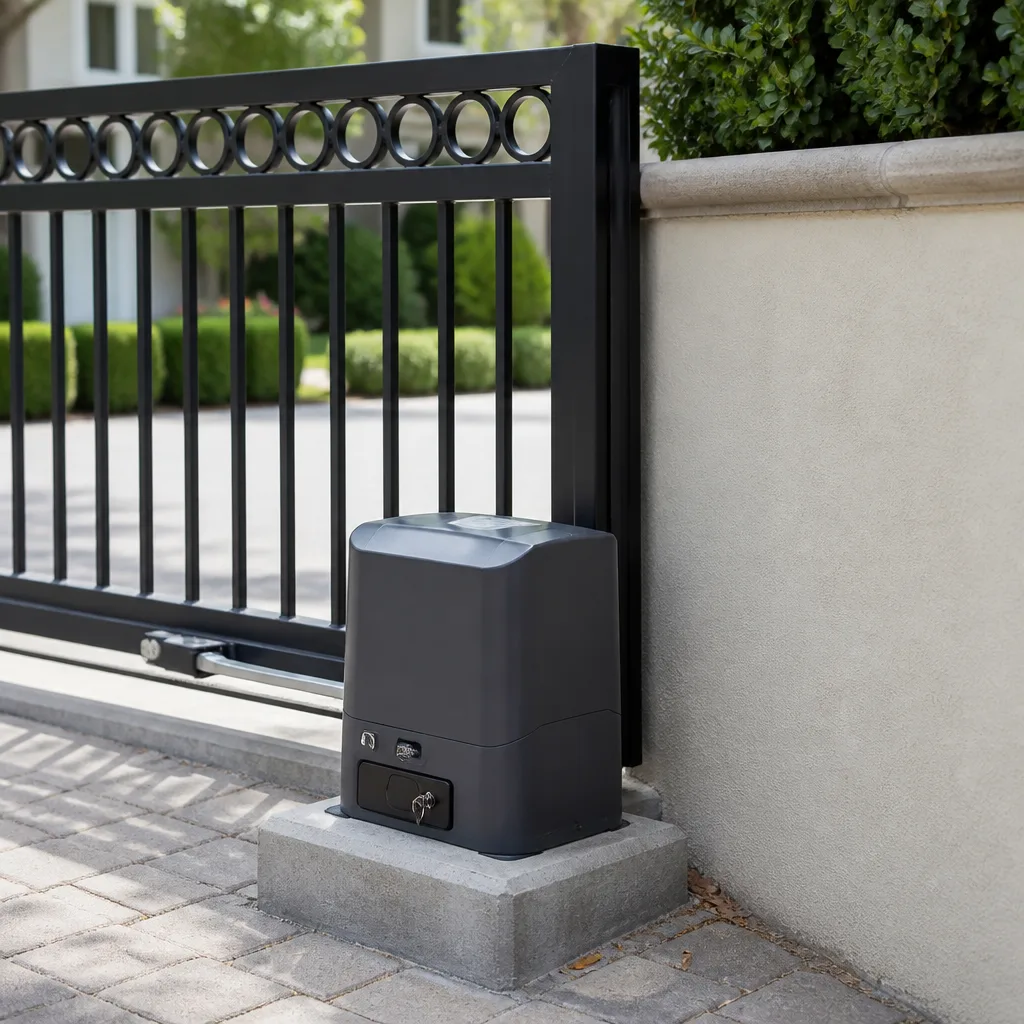
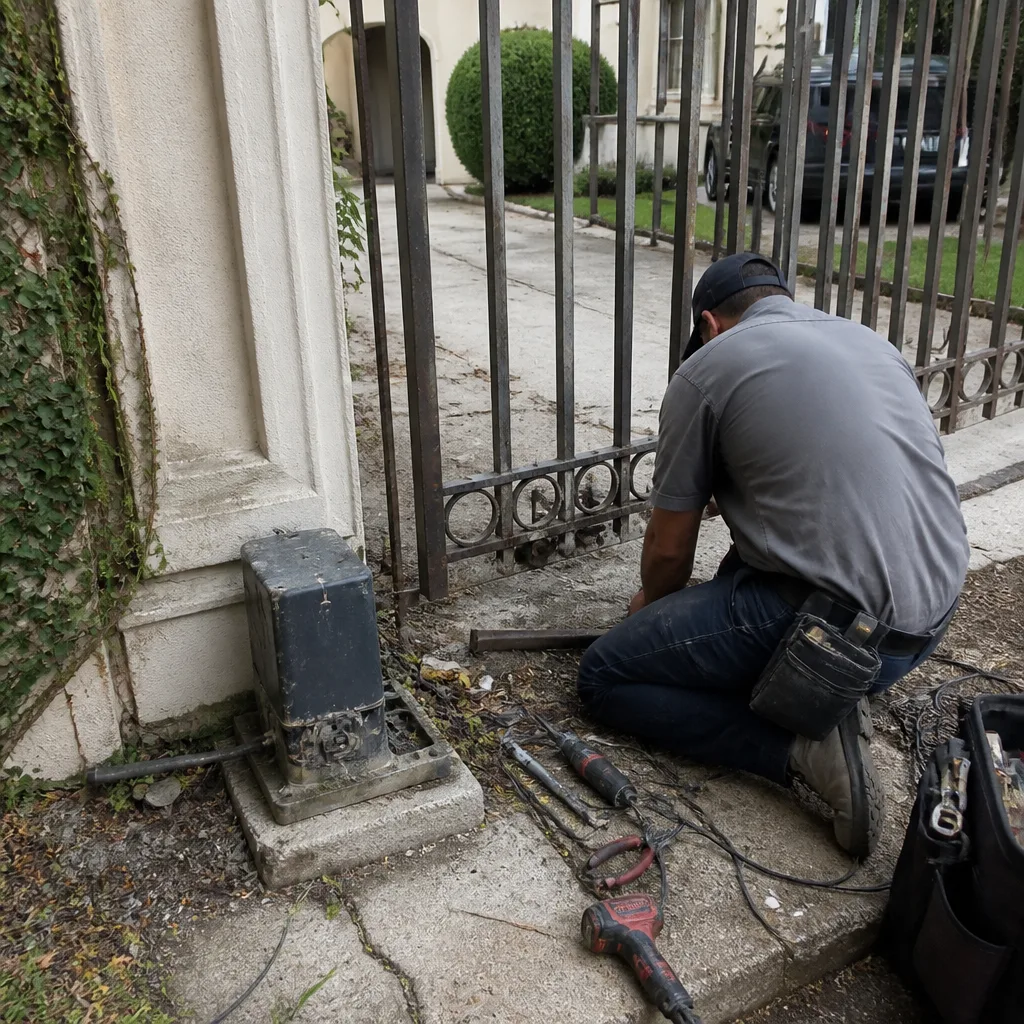 Before
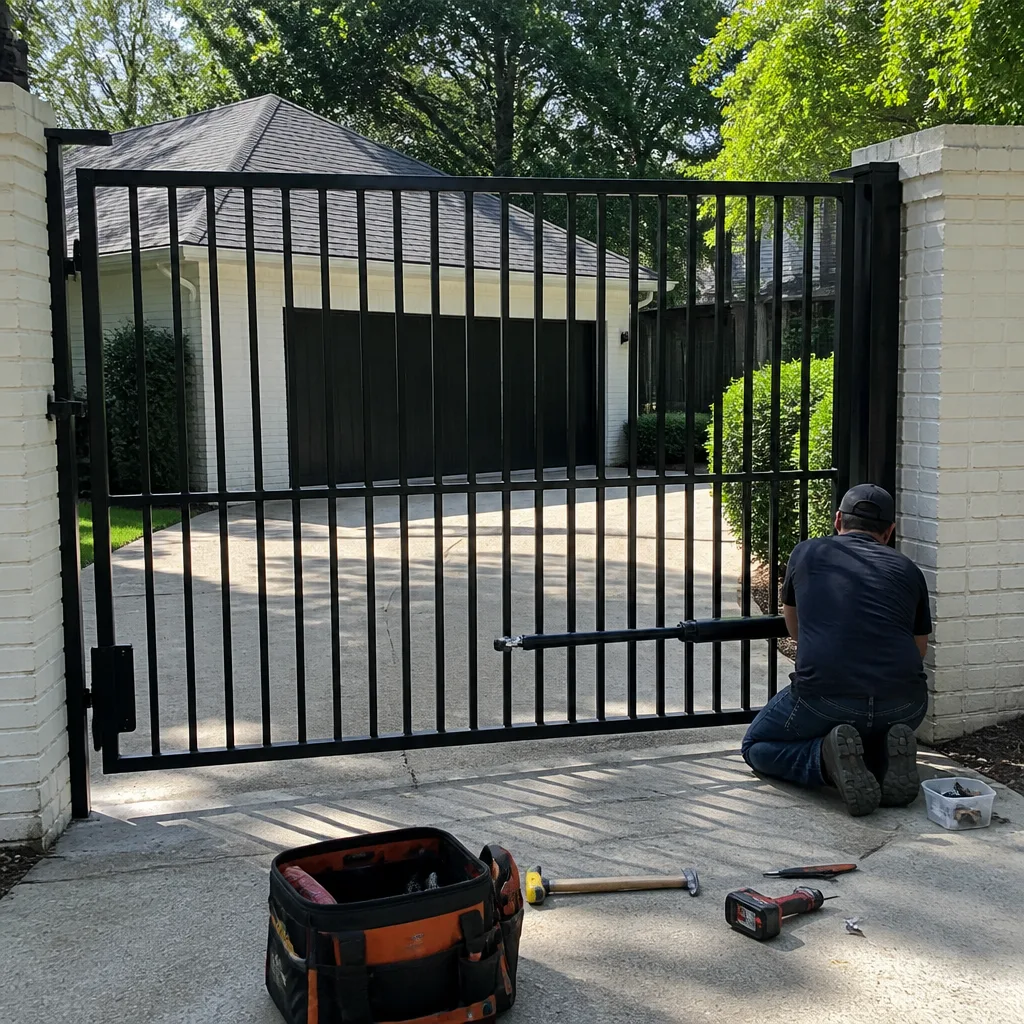 After
After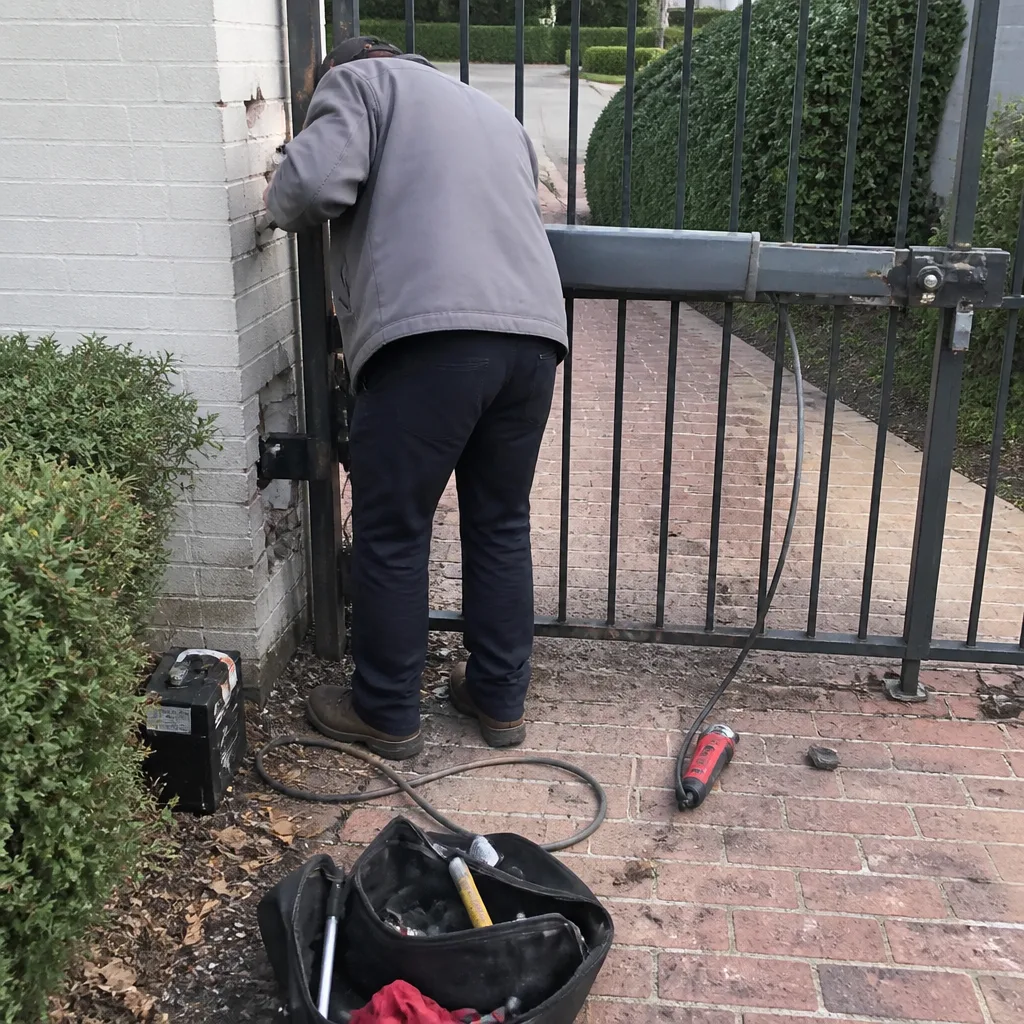 Before
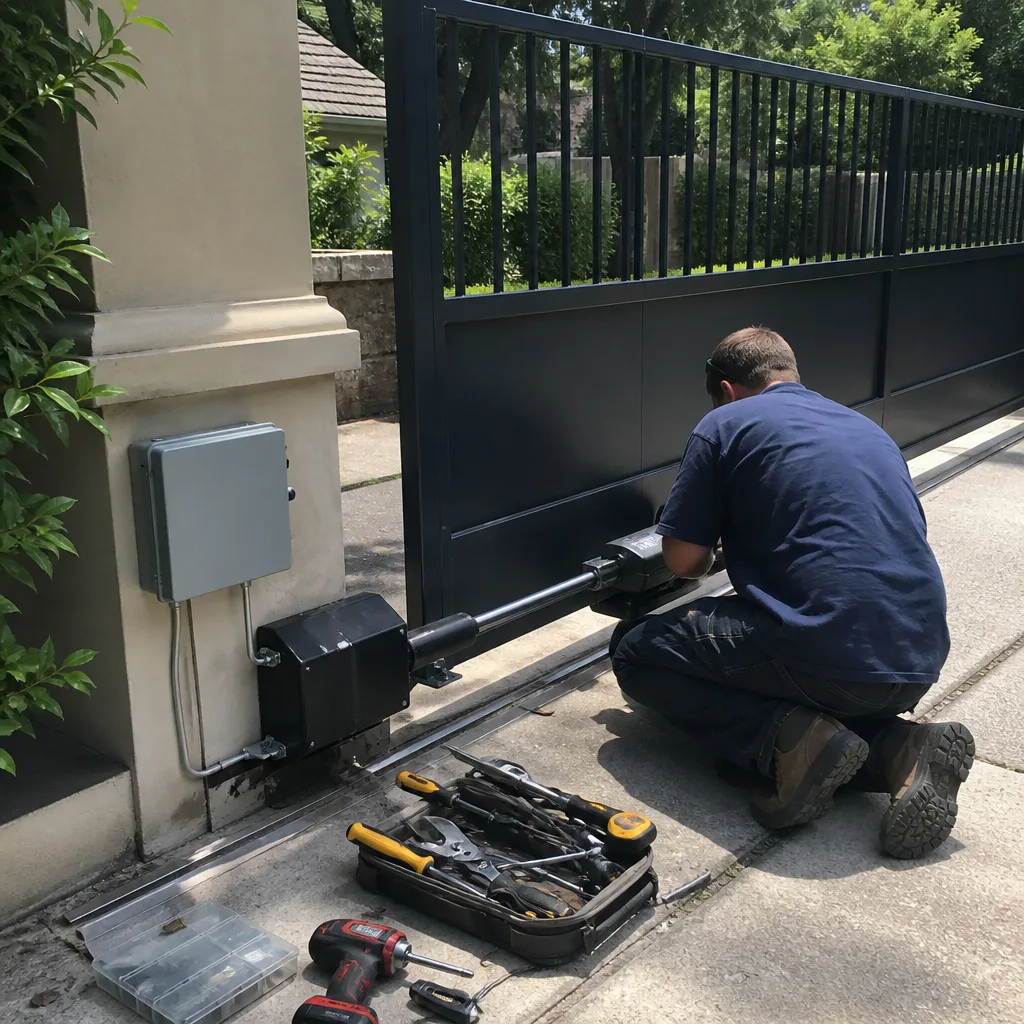 After
After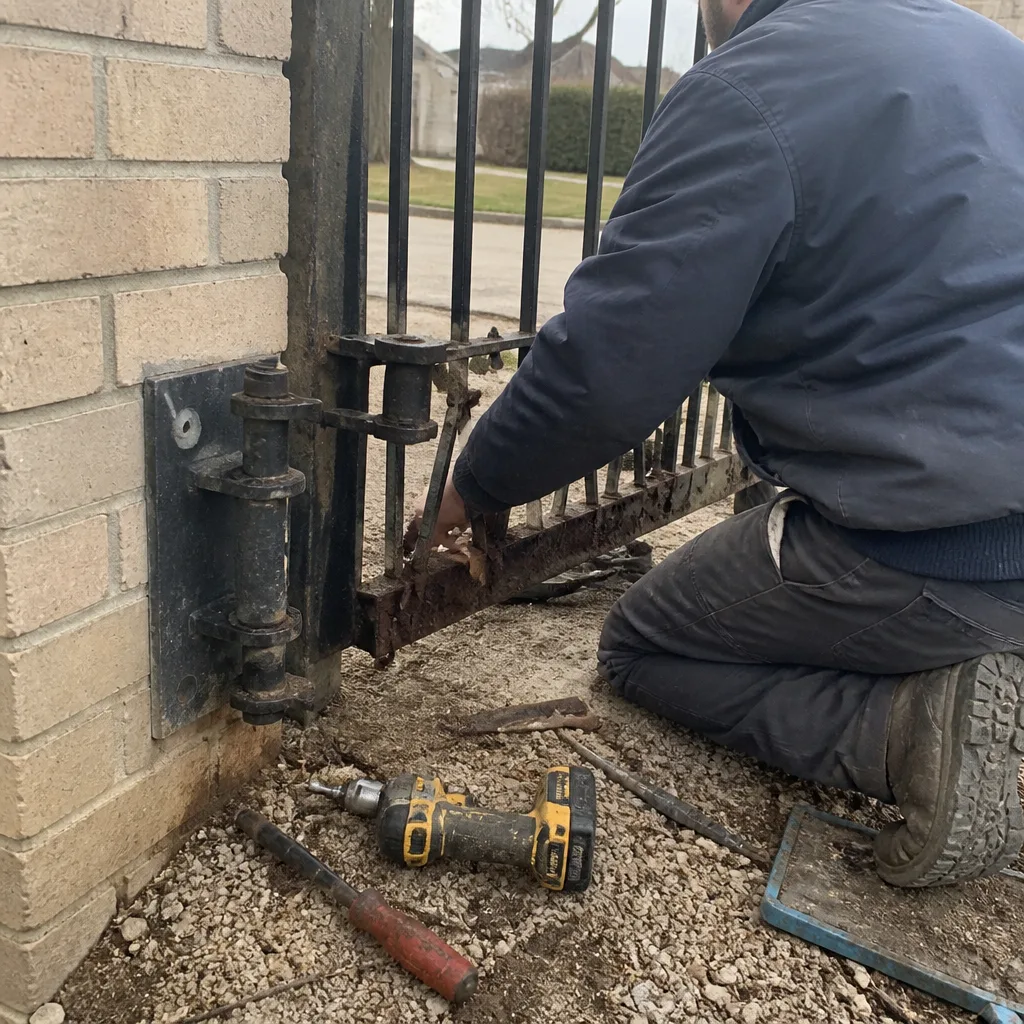 Before
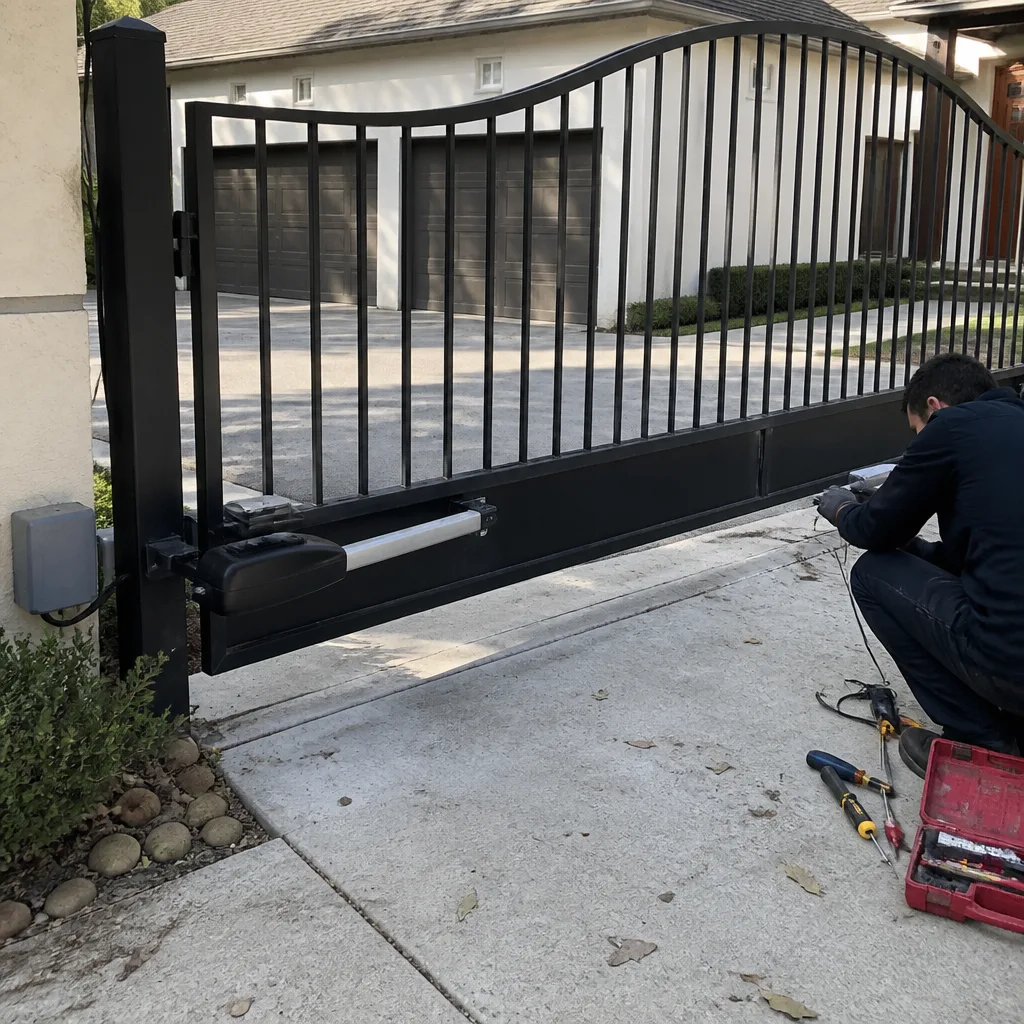 After
AfterGate Repair Permits, Codes & Inspections in TX: What You Need to Know
Most homeowners in Highland Park are surprised to learn that Texas does not have a single, unified statewide gate code. What governs your driveway gate depends on whether you live inside city limits, in an unincorporated county pocket, or in a community with a homeowners association that has its own architectural review. This guide walks through the permits, codes, and inspection realities that apply to gate repair and replacement in Texas, with particular attention to how things work here in Highland Park and the surrounding Park Cities area. You’ll learn when a repair triggers a permit, what inspectors actually look for, and how to avoid the two or three mistakes we see cost homeowners real money every year.
Quick Answer
In Texas, gate repair and replacement is governed by local city or county codes, not one statewide standard. For Highland Park homeowners, a repair that replaces existing components like hinges, openers, or welded sections usually requires no permit, while a full gate replacement or new installation often requires a building permit and an electrical permit if automation is involved. The most important safety requirements involve gate entrapment protection (UL 325 compliance), proper clearances, and backup power systems for emergency access.
Table of Contents
- Do You Need a Permit for Gate Repair in Texas?
- How Permits Work in Highland Park Specifically
- Texas Gate Code Requirements: UL 325 and Entrapment Standards
- Electrical Codes for Automated Gates
- What Inspectors Look For During a Gate Inspection
- HOA Rules and Architectural Review for Gates
- Common Mistakes to Avoid
- When to Call a Professional
- Frequently Asked Questions
Do You Need a Permit for Gate Repair in Texas?
The short answer: most repairs do not require a permit, but most installations do. Texas operates under a patchwork of municipal building codes, and nearly every city in the Dallas-Fort Worth metroplex, including Highland Park, has adopted some version of the International Building Code (IBC) and International Residential Code (IRC) with local amendments. Those codes draw a clear line between maintenance and new work.
A repair is generally defined as restoring something to its original condition. Replacing a bent hinge, welding a cracked frame, swapping out a failed opener motor, or installing a new keypad are all considered repairs because you are restoring function, not changing the structure. These jobs rarely require a permit anywhere in Texas.
A replacement or new installation is different. If you are tearing out an old gate and welding an entirely new one, or installing a gate where none existed before, you are now doing work that changes the property. That triggers a building permit in most municipalities, including Highland Park. The gate posts are typically set in concrete footings, and the structure must meet wind-load requirements that Texas enforces more strictly than many other states thanks to our storm exposure.
Here is a practical breakdown of what typically requires a permit in Texas gate work:
- Hinge replacement, welding repair, opener swap, keypad replacement: No permit required. This is maintenance.
- Full gate replacement using existing posts: Sometimes requires a permit, depending on the city. Highland Park generally wants to see one.
- New gate installation where none existed: Almost always requires a building permit. The footings and the structure are new construction.
- Adding automation to a previously manual gate: Requires an electrical permit in most cities. The motor, wiring, and entrapment sensors all fall under electrical inspection.
- Moving or widening a gate opening: Always requires a permit. You are altering the property footprint.
One detail we see trip up homeowners in Highland Park: even when a permit is not required for a repair, the repair still has to meet current code if it touches safety components. You cannot, for example, replace a broken gate opener with a used unit that lacks the entrapment protection sensors required since the early 2000s. The work itself may not need a permit, but the equipment you install must be code-compliant.
How Permits Work in Highland Park Specifically
Highland Park is a municipality with its own building inspection department, separate from Dallas and separate from University Park next door. The town takes property standards seriously, and that conservative approach extends to gate work. Homeowners who try to skip the permit process on a full gate replacement will typically get a letter from the town if a neighbor or contractor files a complaint, and the town does follow up.
The permit process in Highland Park is straightforward but specific. You or your contractor files a permit application with the town’s building inspections office, providing a site plan or drawing that shows the gate location, dimensions, and relationship to the property line. The town reviews the submittal for setback compliance, which matters more for driveway gates than most homeowners realize. A gate set too close to the street can obstruct the town’s right-of-way, and the town will require it to be moved back at your cost.
For automated gates, the town treats the electrical work as a separate trade permit. The electrical inspector wants to see that the opener is listed (UL or ETL), that the circuit is properly grounded, and that the required safety devices are installed and functional. In practice, this means photoelectric sensors at the gate opening and a reversing mechanism that meets the UL 325 standard, which we cover in the next section.
What Highland Park does not require for a straightforward gate repair is a permit. Replacing a hinge, welding a cracked ornamental bracket, or installing a new LiftMaster or BFT opener on an existing gate does not need town approval. We have done hundreds of these jobs in the Park Cities, and the town’s inspectors are consistent on this point: if you are restoring, not building, you are fine.
The takeaway for a homeowner weighing a gate project in Highland Park: if the work involves new concrete, new posts, or a gate where no gate stood before, assume you need a permit. If the work is repair and replacement of parts on an existing gate, assume you do not. When in doubt, call the town’s building inspections office directly. They are helpful, and a five-minute phone call is cheaper than a stop-work notice.
Texas Gate Code Requirements: UL 325 and Entrapment Standards
The single most important code document for any automated gate in Texas is UL 325, the safety standard published by Underwriters Laboratories. Since 2000, UL 325 has governed automatic gate openers at the federal level, enforced through the Consumer Product Safety Commission. If you have an automated gate, UL 325 is not optional. It is the law of the land in all fifty states, including every municipality in Texas.
UL 325 exists to prevent entrapment injuries and deaths. The standard was written after a series of tragic accidents involving children and adults who were crushed or pinned by moving gates. The current version requires every automated gate opener to include an inherent entrapment sensing system, which means the motor itself detects resistance and reverses direction before dangerous force is applied. It also requires external entrapment protection devices, typically photoelectric sensors, on gates that serve residential driveways where children could reasonably be present.
Here is what UL 325 requires in practical terms for a residential driveway gate in Highland Park:
- Inherent reversal: The opener must reverse automatically when it encounters resistance equal to or less than the force threshold specified in the standard. A gate that keeps pushing against an obstruction is non-compliant, period.
- Photoelectric sensors: Also called photo eyes or safety beams, these sensors project an invisible beam across the gate opening. If the beam is broken while the gate is moving, the gate must stop and reverse. They must be mounted at a height that a small child cannot step over or crawl under without being detected.
- Warning signage: Every automated gate must display a warning sign visible from both sides of the gate, alerting pedestrians to the entrapment hazard. The sign must be permanent and legible from a reasonable distance.
- Controls placement: Gate controls, including keypads and push buttons, must be positioned so a user cannot reach through the gate to activate it from the far side. This prevents someone from reaching through the gate, pressing the button, and being caught by the moving gate.
- Backup power: The opener must be capable of operating from a backup source, typically a battery, so the gate can be opened in a power outage for emergency access. Fire departments in Texas take this requirement seriously, and so do the inspectors in Highland Park.
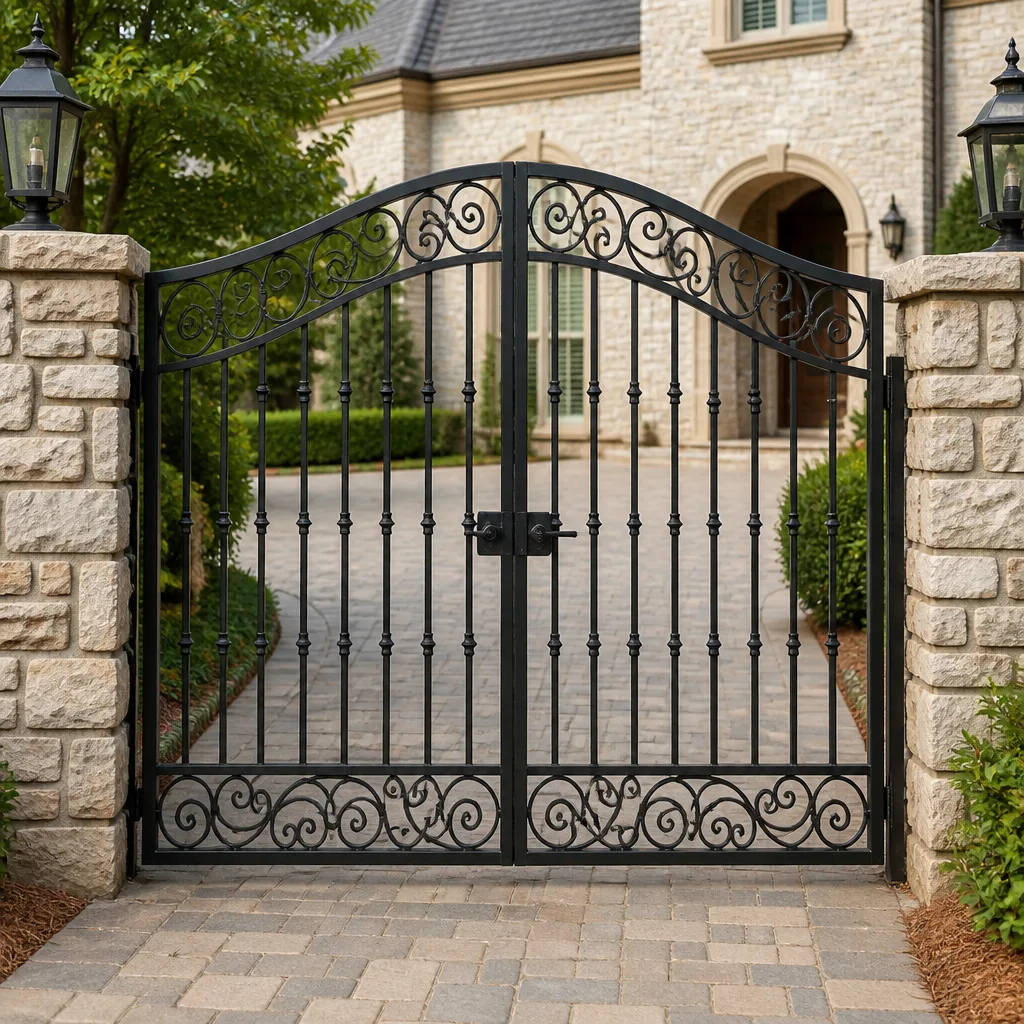
For ornamental iron gates like the ones common throughout the Park Cities, there is an additional practical consideration the code does not address directly but that we see regularly: picket spacing and gate design. A gate with wide spacing between the vertical pickets can allow a small child to slip through and access the moving mechanism, which is exactly the scenario UL 325 was written to prevent. High-quality gate builders in the Dallas area size pickets with this in mind, keeping gaps under four inches.
Electrical Codes for Automated Gates
Any gate with a motor, keypad, intercom, or access control system falls under the National Electrical Code (NEC), which Texas has adopted with state-specific amendments. The NEC provisions that matter for gate work are found in Article 430, covering motors; Article 300, covering wiring methods; and Article 250, covering grounding. An electrical inspector in Highland Park will focus on these specific areas.
The most frequently cited electrical code violation we see on gate jobs is improper wiring depth. Low-voltage wiring for gate openers, keypads, and photo eyes must be buried at a minimum depth, and the exact depth depends on whether the wiring is direct-burial rated or run in conduit. In Texas clay soil, which shifts with moisture and temperature, shallow-buried wire is a recurring failure point. A wire buried three inches deep under a gravel driveway will be cut by the first resurfacing project or the freeze-thaw cycle we get every few winters.
Grounding is the second most common issue. A gate opener motor carries line voltage, and the NEC requires a proper equipment ground to prevent shock hazards. An opener mounted on a metal gate post in a Texas thunderstorm is exactly the scenario grounding requirements exist to protect. An inspector who finds a missing or improper ground will fail the inspection, and the fix usually involves running new wiring, which is far more expensive than doing it right the first time.
Here is a simple numbered sequence for how a compliant electrical installation should proceed on a new automated gate:
- Plan the power run: Determine whether the opener will draw 110V or 220V, and size the circuit accordingly. Most residential slide and swing gate openers from brands like Linear and Viking run on 110V, but larger estate gates may need 220V.
- Run conduit or direct-burial cable: The wire from the house panel to the gate opener must be buried to code depth. Direct-burial rated cable is acceptable, but conduit provides easier future replacement and is the better long-term choice in Texas soil.
- Install a dedicated circuit: The gate opener should be on its own breaker, not shared with landscape lighting or outlet circuits that could trip and disable the gate.
- Ground the opener and any metal components: The motor, any metal control box, and the gate frame itself if it is conductive must be bonded to the equipment ground.
- Install an exterior-rated disconnect: There must be a way to cut power to the opener without entering the house. An exterior-rated disconnect switch near the gate satisfies this requirement.
One Highland Park-specific consideration: the town’s electrical inspectors are thorough, and they will check for GFCI protection on any exterior receptacle serving the gate area, including the outlet a gate opener plugs into. This is a small detail that trips up homeowners who install their own openers, and it is one of the most common reasons we are called out after a failed inspection.
What Inspectors Look For During a Gate Inspection
If your gate project does require a permit, the inspection process in Highland Park follows a predictable sequence. Knowing what the inspector will examine before the inspection happens saves time and prevents the frustration of a failed inspection and a re-inspection fee.
For a structural gate inspection, the inspector is looking at three things: footing depth, materials, and connection to the posts. Texas building codes require gate posts to be set in concrete footings deep enough to resist both wind load and the constant stress of a heavy gate swinging or sliding on its hinges. A 1,200-pound ornamental iron gate is a substantial structure, and an inspector who finds posts set in three inches of concrete over shifting clay will not pass the job. This is not theoretical in North Texas. W are in a region with expansive clay soil, and a gate post that is not set deep enough will lean within a few seasons, pulling the gate out of alignment and eventually destroying the hinge bearings.
For an automated gate electrical inspection, the focus shifts to the components we covered above: UL 325 compliance, proper wiring methods, grounding, and the presence and function of entrapment protection devices. The inspector will test the gate’s reversing mechanism, usually with a physical obstruction, and will verify that the photo eyes are mounted correctly and wired into the control board so that a blocked beam stops the gate.
Here is a step-by-step account of what a typical inspection visit looks like in Highland Park:
- Scheduling: The permit holder or contractor calls the town to schedule the inspection. Highland Park typically offers next-day or two-day inspection windows, which is faster than Dallas proper.
- Arrival and documentation: The inspector checks the permit number and the approved plans or submittal. If the work deviates from what was approved, the inspection stops there.
- Visual walkthrough: The inspector walks the gate area, checking clearances, setbacks, and the gate’s relationship to the property line and any easements.
- Structural check: Footings are verified visually (or through photos if they were poured before inspection). Post depth, concrete quality, and weld integrity on the gate frame are noted.
- Electrical check: The opener is tested for UL 325 compliance. Reversal force, photo eye function, grounding, and disconnect placement are all verified.
- Signage and final items: The inspector verifies warning signs are mounted, controls are properly placed, and any required backup power is installed.
Most gate inspections in Highland Park pass on the first visit when the work is done by a contractor who knows the process. Failures we see are almost always traceable to skipped entrapment protection, improvable grounding, or signage missing on one side of the gate. All three are easy to fix, but they cost you another inspection cycle.
HOA Rules and Architectural Review for Gates
In Highland Park and much of the Park Cities, the homeowners association is frequently a larger hurdle than the town’s building department. Many neighborhoods in this part of Dallas have architectural review committees that must approve any change visible from the street, including gates. The town may issue a permit, but if the HOA has not signed off, the gate still cannot go in.
HOA gate requirements vary widely by community, but there are patterns we have observed over years of work in the area. Most HOAs in Highland Park and University Park have specific finish standards, meaning the gate must match the existing architectural style of the home and neighborhood. Black or dark bronze wrought iron is the default, but some communities specify exact paint colors or require specific ornamental patterns. Some HOAs restrict gate height, with a common maximum of six feet for driveway gates. A few older established neighborhoods have covenants that prohibit driveway gates entirely, though these are rare and usually date to the original plat documents.
The practical advice for any Highland Park homeowner considering a gate replacement: start with the HOA. Get the architectural review application, submit drawings or photos of the proposed gate, and wait for written approval. Do this before pulling a permit with the town. We have seen homeowners do it in reverse order, pay for a permit, and then have the HOA reject the gate design because the finials did not match the neighborhood standard. The permit fee is not refundable.
One more HOA consideration: some communities require that automated gates be programmed to accommodate service vehicles, including garbage trucks, mail carriers, and utility crews. This usually means installing a loop detector or a fire department lockbox system that allows authorized vehicles to open the gate without a code. If your HOA requires this, it must be part of the plan before installation begins, because retrofitting a loop detector into a driveway that has already been poured is expensive.
Common Mistakes to Avoid
- Skipping the permit on a full gate replacement. In Highland Park, a full replacement usually needs a building permit. If the town finds out, you can get a stop-work order, a fine, and the cost of applying for the permit after the fact is higher than getting it right the first time.
- Installing an opener without entrapment protection. A gate opener without the UL 325 reversing mechanism and photo eyes is not just non-compliant. It is a genuine safety hazard, and any inspector who sees it will fail the job.
- Burying low-voltage wire too shallow. Texas clay shifts, and shallow wire gets cut by routine landscape work and driveway maintenance. Run it to code depth in the first place, or you will be digging it up again in two years.
- Ignoring HOA approval because the town gave a permit. The town permit and the HOA approval are separate processes. Both are required in most Highland Park neighborhoods, and the HOA can force removal of a gate installed without architectural review approval.
- Underestimating wind load requirements. Texas is a high-wind state, and a properly engineered gate needs footings sized for the gate’s weight and surface area. A gate that meets code in Michigan will not necessarily meet code in Dallas County.
- Choosing an opener based on price rather than UL 325 compliance. Some imported openers sold online are not UL listed and do not meet the federal entrapment standard. Installing one is a code violation and a safety risk, regardless of what the seller claims.
- Not budgeting for a backup power source. The NEC and UL 325 both address backup operation for automated gates. A gate that cannot be opened during a power outage is a fire access issue, and emergency responders in Highland Park take that seriously.
When to Call a Professional
Some gate work is genuinely DIY-appropriate: lubricating hinges, tightening bolts, replacing a keypad battery. But most of what determines whether your gate is safe and code-compliant is not. Any time you are touching the structure of the gate, the electrical system, or the entrapment protection devices, you are better off with a contractor who does this work every day. A welded repair on a cracked gate frame requires the right material and technique, and a bad weld on a 1,200-pound gate is a structural failure waiting to happen. An opener installation involves line voltage, buried wiring, and safety sensors that must be calibrated correctly. The stakes are too high to learn on the job.
Ironworks Gate Co. offers free estimates in Highland Park. Call (936) 277-6521 to schedule one, and we will tell you honestly whether your project needs a permit, what the code requirements are, and what a fair price looks like.
Frequently Asked Questions
Most repairs do not require a permit in Highland Park. Replacing hinges, welding a crack, swapping an opener, or installing a new keypad is considered maintenance, not construction. A full gate replacement or a new installation generally does require a building permit from the town’s inspections office. If you are unsure, call the town or ask your gate contractor to confirm before work begins. Call (936) 277-6521 if you want a straight answer on your specific situation.
UL 325 is the federal safety standard that governs automatic gate openers, including entrapment protection requirements. Any automated gate in Texas must comply with UL 325, which means it needs a reversing mechanism, photo eye sensors, and warning signage. An opener that lacks these features is both a code violation and a genuine safety risk, particularly for children. Always verify UL 325 compliance before installing any opener, including brands like BFT, Linear, and Ghost Controls.
Permit fees in Highland Park vary based on the scope and valuation of the work, and the town sets its current fee schedule annually. A gate repair that requires no permit costs nothing for permits. A full replacement permit is typically a few hundred dollars, though the exact figure depends on the project valuation you submit. The best way to get an accurate number is to call the Highland Park building inspections office directly or ask your contractor to include the permit cost in the written estimate.
Yes, in most Highland Park neighborhoods the HOA has architectural review authority over anything visible from the street, including driveway gates. You generally need HOA approval before you pull a town permit. Many HOAs have specific finish standards, height limits, and design requirements, and some require special provisions for service vehicle access. Start with your HOA’s architectural review committee and get written approval before buying a gate.
Highland Park can issue a stop-work order, levy fines, and require you to apply for a permit after the fact, which is more expensive than the original permit would have been. The town can also require an inspection of work that has already been completed, and if the work does not meet code, you must bring it into compliance at your expense. The financial risk of skipping the permit far outweighs the short-term savings. A reputable gate contractor will handle the permit process as part of the job.
Texas law does not prohibit a homeowner from installing their own gate opener, but the work still has to meet NEC electrical requirements and UL 325 safety standards. Most homeowners lack the tools and training to run buried wiring to code depth, ground the opener properly, and calibrate entrapment sensors correctly. A failed inspection or a safety incident costs far more than professional installation. For a free estimate on a code-compliant opener installation in Highland Park, call (936) 277-6521.
The Bottom Line
Gate permits and codes in Texas come down to this: repairs are usually permit-free, replacements and new installations usually are not, and every automated gate must comply with UL 325 entrapment protection regardless of whether a permit was required. In Highland Park, you are dealing with a town that takes property standards seriously and HOAs that add a second layer of review. The HOA comes first, then the town permit, then the work itself. Done in that order, a gate project is smooth. Done out of order, it becomes expensive. When the time comes for your gate, get a contractor who knows this process and will handle the paperwork. Call (936) 277-6521 for a free estimate from a company that has been doing this work in Texas for decades.
Written by Victor Salinas, Owner at Ironworks Gate Co., serving Highland Park since 2013.