
Last updated August 25, 2026
Free on-site gate assessment - hinges, posts, and your LiftMaster or Nice gate operator checked before anything is quoted
The assessment is free and the quote is the invoice.
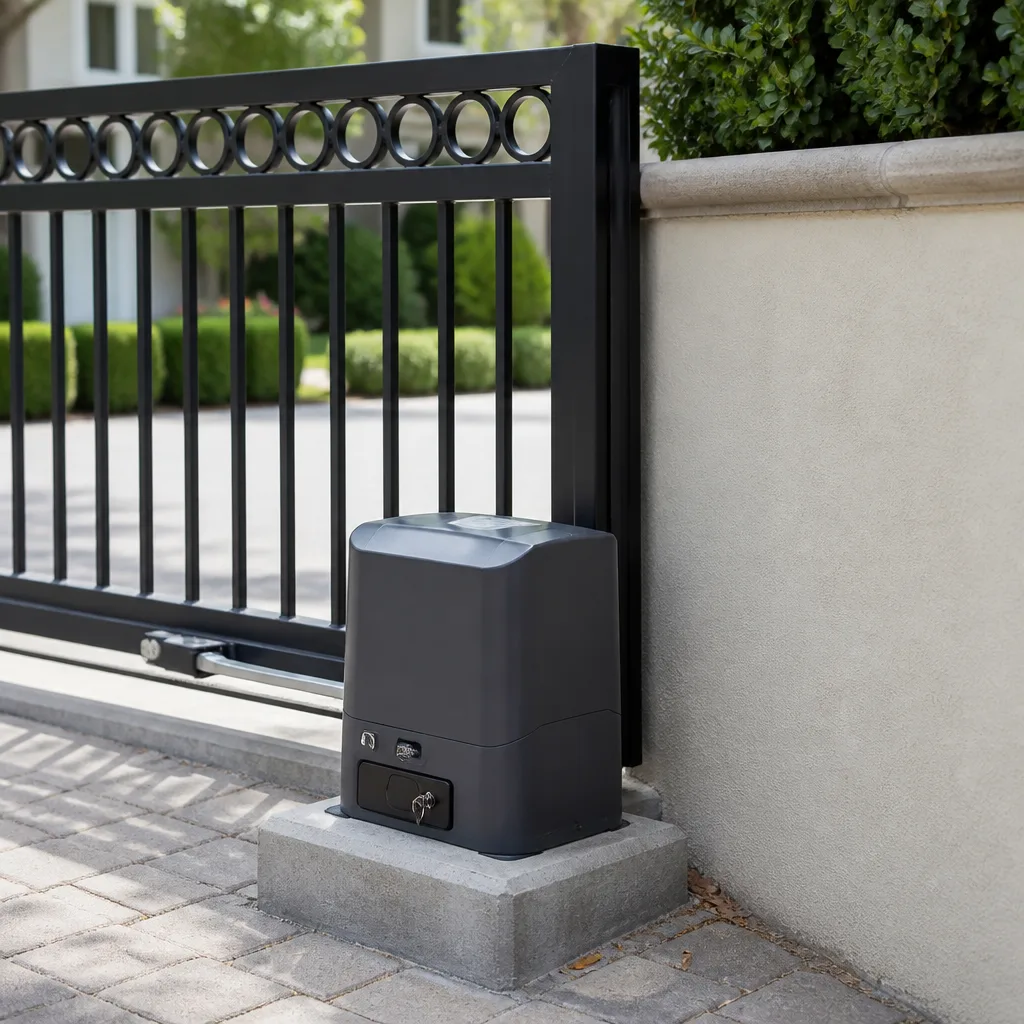
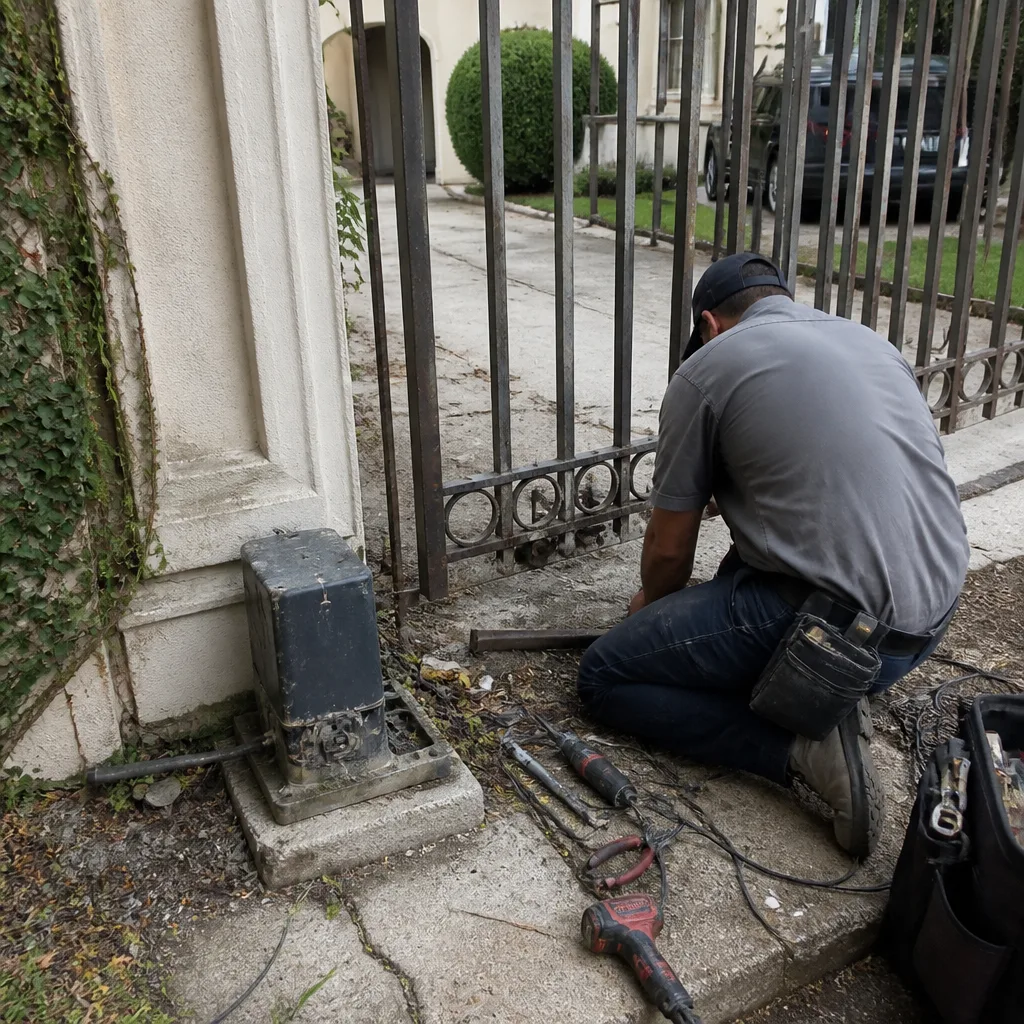 Before
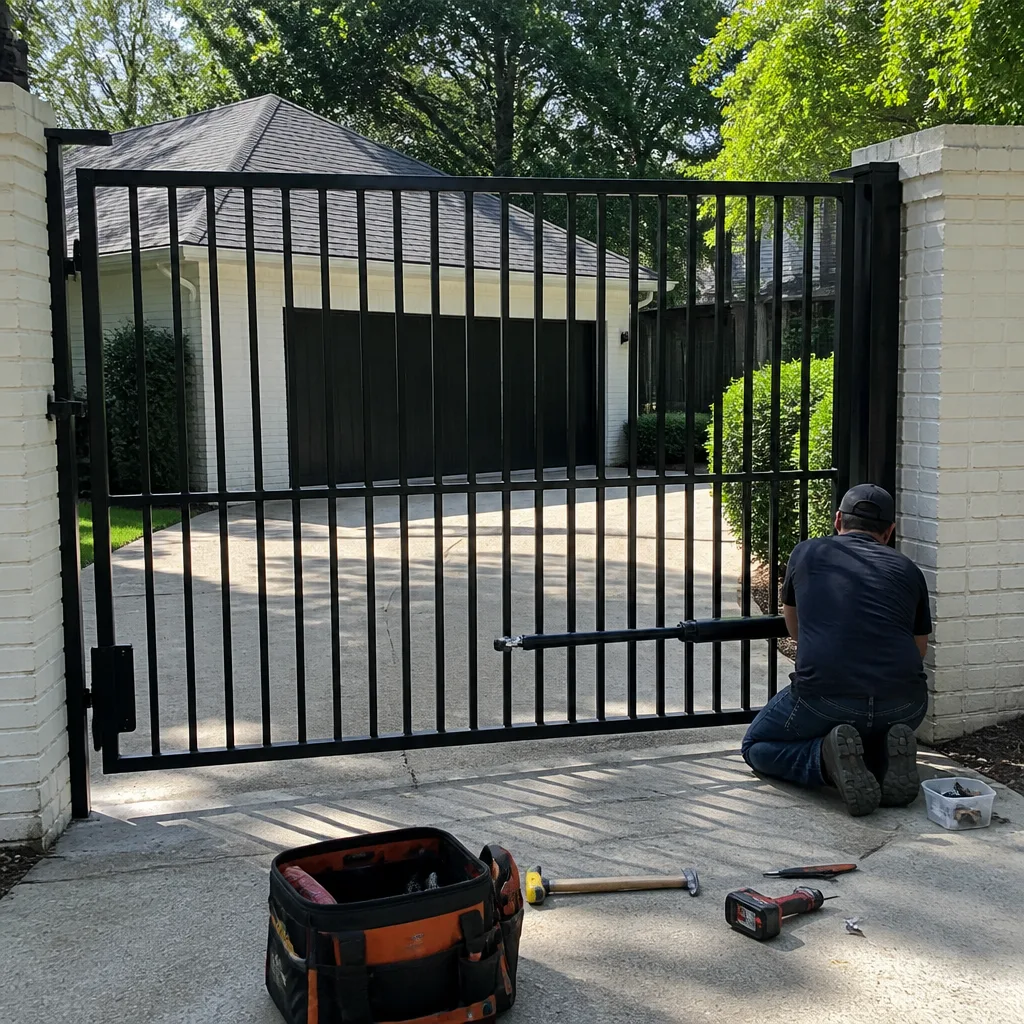 After
After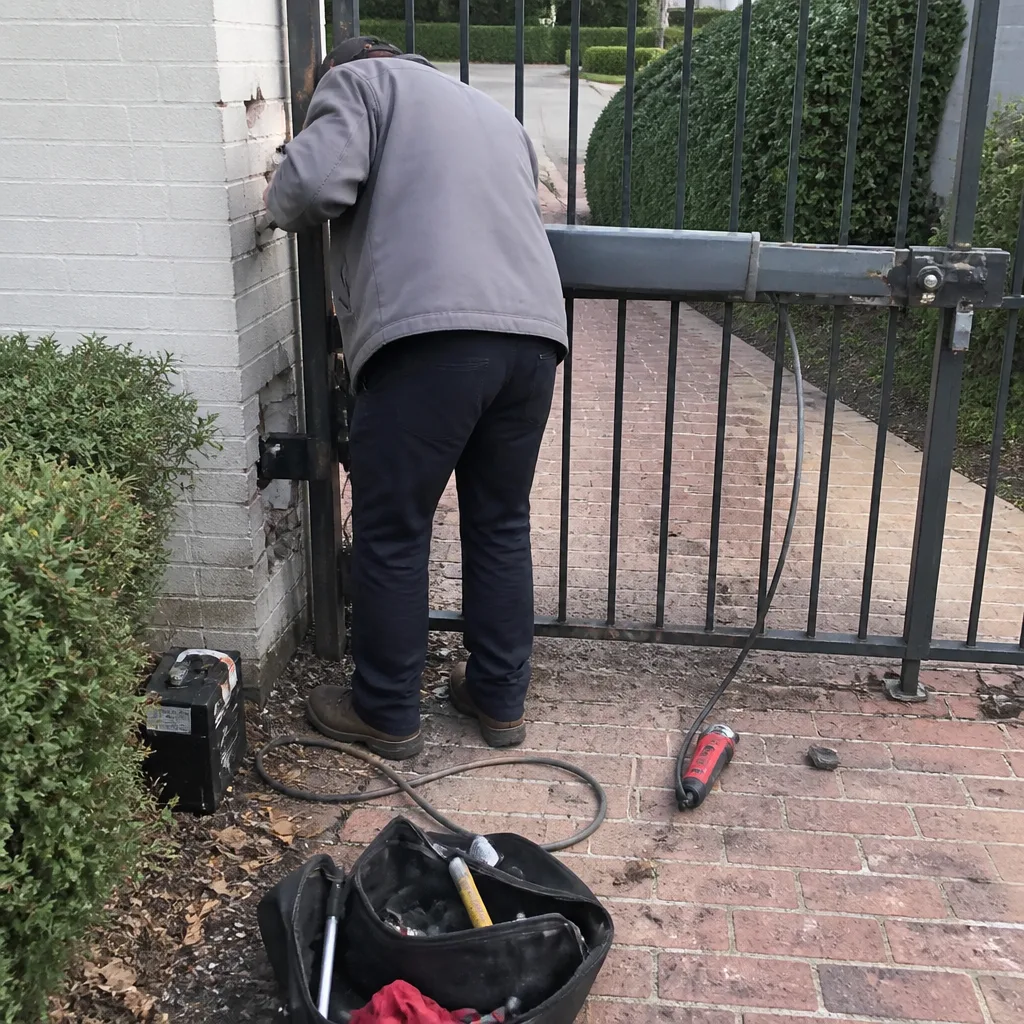 Before
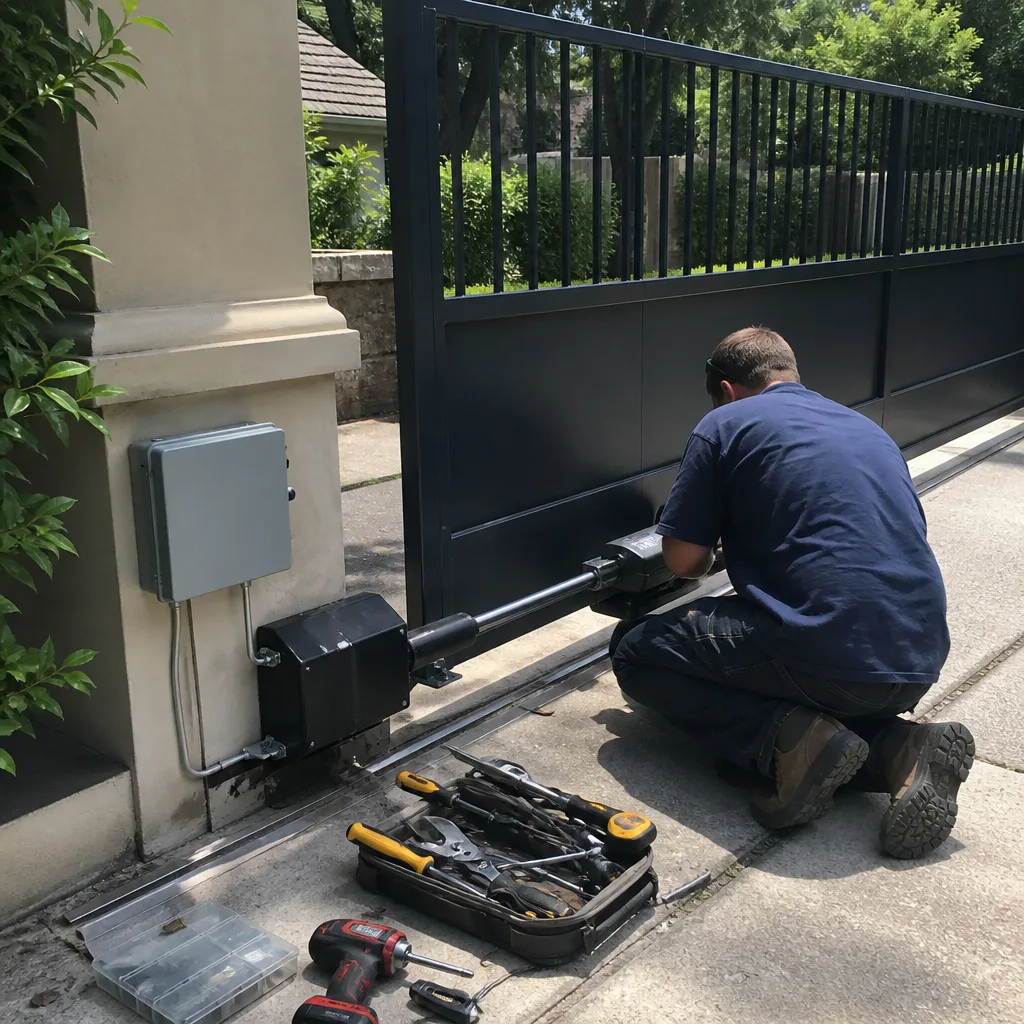 After
After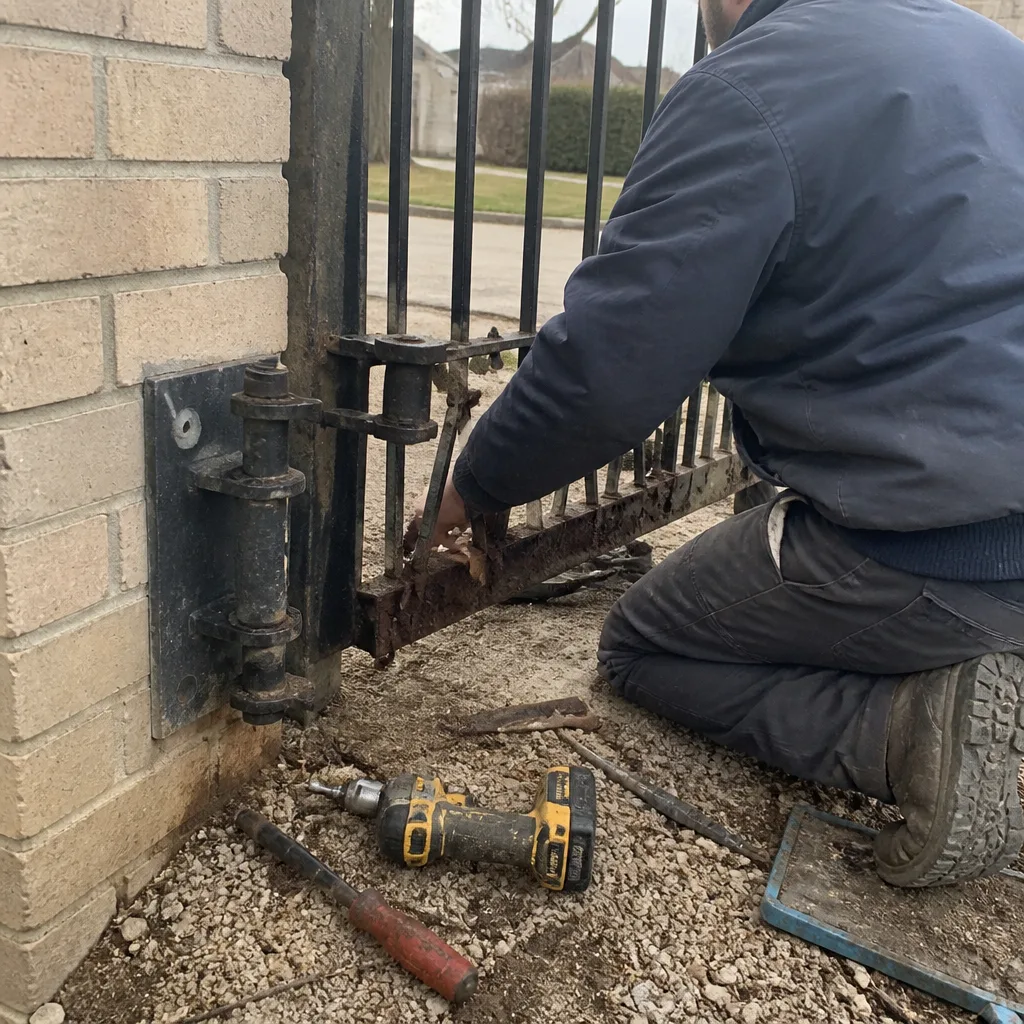 Before
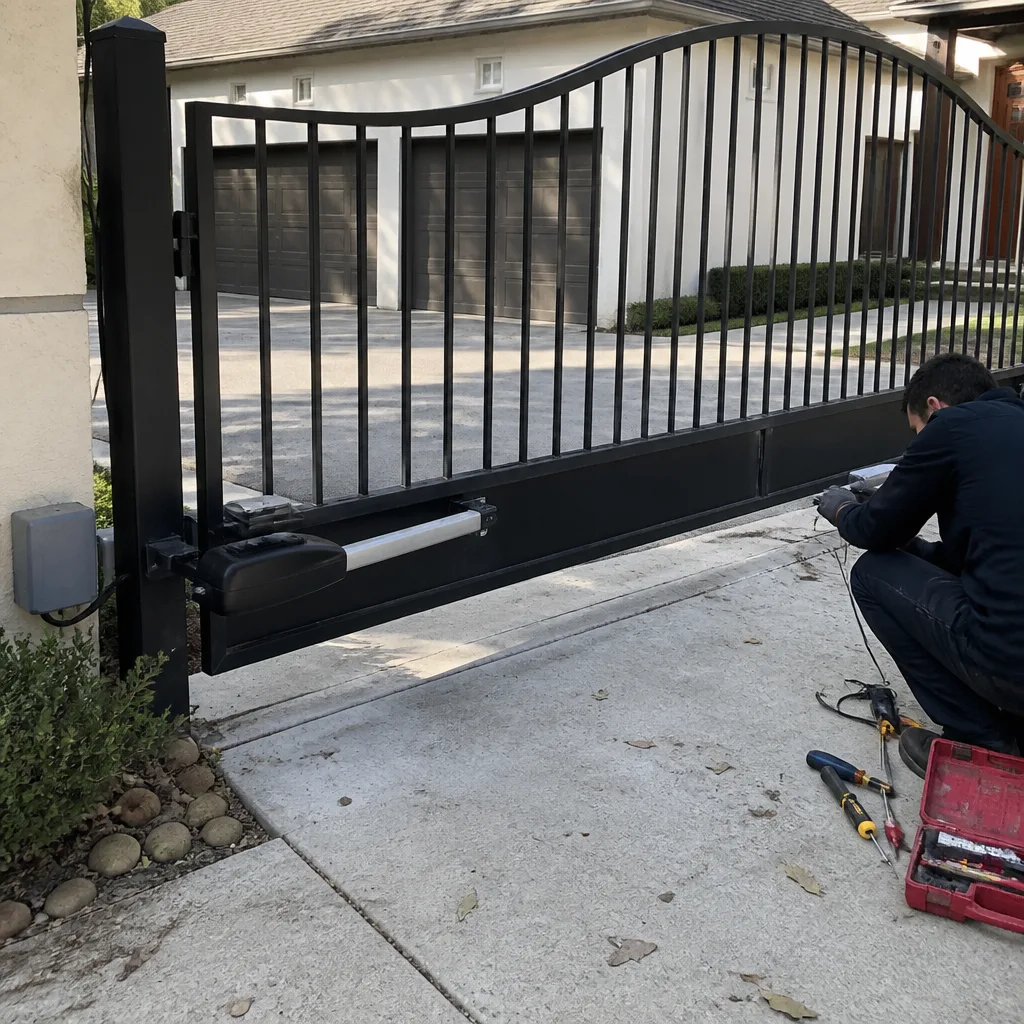 After
AfterGate Repair Maintenance Checklist for Highland Park Homeowners
Most gate failures in Highland Park don’t start with a dramatic event like a delivery truck backing into a post. They start quietly, with wear that builds over months and years until one Tuesday morning the gate simply refuses to open and you’re trapped in your own driveway. The Texas climate has a hand in this: our hot summers bake the grease out of hinges, and the clay-heavy soil beneath this part of Dallas shifts with every wet-dry cycle, slowly pulling foundations out of square. This guide gives you a practical maintenance checklist to catch problems before they strand you, plus the repair insight we’ve built over four decades of work on Highland Park gate systems. You’ll learn what to check monthly, what to leave alone, and when a call is cheaper than a guess.
Quick Answer
A seasonal gate maintenance checklist for Highland Park homeowners should cover four areas: hinges and hardware lubrication, gate alignment and leveling, opener and safety sensor function, and bolt and weld inspection. We recommend a light DIY check every month, a deeper seasonal tune-up twice a year, and a professional inspection any time the gate starts moving differently than it did the month before. Most problems found early cost under $200 to fix; the same problem ignored for a year routinely runs $600 to $1,200 or more.
Table of Contents
- The Monthly Gate Checklist: Five Minutes That Prevent Most Repairs
- Seasonal Maintenance in Highland Park: Why Spring and Fall Matter
- Hinges, Bolts, and Welds: What Actually Wears Out
- Opener and Motor Care: The Parts That Die Quietly
- Safety Sensors and Auto-Reverse: The Non-Negotiables
- Common Mistakes to Avoid
- When to Call a Professional
- Frequently Asked Questions
- The Bottom Line
The Monthly Gate Checklist: Five Minutes That Prevent Most Repairs
Once a month, walk your gate through one complete open-and-close cycle and pay attention. You’re not looking for perfection; you’re looking for change. A gate that has always hummed slightly and now rattles is different from a gate that has always hummed. The change is the signal.
Here’s the checklist we give to Highland Park homeowners who want to stay ahead of repairs:
- Listen to the opener. A smooth motor sounds like a low, steady hum. Grinding, clicking, or a rise in pitch during the travel means the motor is working harder than it should. That strain is how openers burn out early.
- Look at the gate’s line of travel. Stand back and watch the gate close. It should track straight with no wobble, and the posts should stay still. A post that visibly flexes when the gate moves is a foundation problem beginning.
- Check the gap between gate and post. A healthy gap runs even from top to bottom. If the gap is wider at the top or the bottom, the gate is sagging. In Highland Park’s expansive clay soil, this is the single most common issue we see on gates older than ten years.
- Feel the hinges. Press a gloved finger against each hinge barrel. They should feel warm, not hot, after a cycle. Heat means friction; friction means wear. A hinge running dry turns a $40 lubrication into a $400 hinge replacement if left alone.
- Check the safety sensors. Wave your hand in front of the photoelectric eye while the gate is closing. It should reverse immediately. If it doesn’t, stop using the gate in automatic mode and call for service. A gate that does not auto-reverse is a serious safety hazard, especially for children and pets.
- Scan for rust and corrosion. Surface rust on ornamental steel is cosmetic until it isn’t. On gates near Highland Park’s sprinkler systems, we see rust eat through 14-gauge steel in under five years when water hits the same spot daily.
- Test the manual release. Every automated gate has a manual release mechanism, usually a keyed lock or a pull lever. Operate it once a month to confirm the gate can be moved by hand in a power outage. A frozen release turns a dead battery into a trapped car.
None of these checks requires tools. The point is repetition, not intensity. Five minutes a month catches problems when they’re still cheap.
Seasonal Maintenance in Highland Park: Why Spring and Fall Matter
Highland Park’s climate works against gate hardware in two distinct waves. Summer temperatures above 95 degrees bake lubricant out of bearings, leaving metal-on-metal contact. Fall and winter bring rain that saturates the ground, and the clay soil beneath most Highland Park homes expands dramatically, lifting and tilting foundations, including the concrete pads that gate posts sit on.
Twice a year, in late March and late October, we recommend a deeper maintenance pass. This is the rhythm that matches the stress cycle of the Dallas climate and catches issues before the season that triggers them.
Spring Maintenance (Late March)
- Re-lubricate all hinge points and the chain or belt drive. Use a silicone-based lubricant, not WD-40, which strips existing grease and leaves surfaces unprotected. A proper hinge grease applied with a needle tip works best.
- Check the post bases for new cracks or gaps. After winter rain, the soil has gone through shrink-swell cycles. Look for hairline cracks radiating out from the post concrete or a visible gap between the concrete and the surrounding soil.
- Inspect welds and fasteners. Thermal expansion and contraction from temperature swings work bolts loose over time. Tighten anything visibly backed out, but don’t over-torque: steel bolts on aluminum frames strip easily.
- Test the auto-reverse on both closing and opening travel. Gate openers should reverse when they encounter resistance in either direction. If the gate closes on a trash bin and doesn’t stop, the force setting is too high.
- Clean the photoelectric eye lenses. Pollen in spring coats the lenses with a fine film that can cause false triggers or, worse, a sensor that intermittently stops working. Clean with a dry cloth; any moisture in the housing should be addressed.
Fall Maintenance (Late October)
- Clear drains and weep holes around the gate posts. Standing water around post bases in Highland Park accelerates rust and contributes to soil instability. Check that water drains away from the post after rain.
- Lubricate lock cylinders and keypads. Dry graphite lubricant in lock cylinders prevents freezing and corrosion through the winter. Avoid oil-based lubricants in locks; they attract grime.
- Test the battery backup, if equipped. Most openers with battery backup will alarm or signal when the battery is degraded, but a manual test confirms it. Power outages are common in Highland Park’s summer storms and winter ice events.
- Check the gate’s vertical alignment and level. After the summer dry spell and the first fall rains, this is when soil movement shows up. A gate that was level in August may be out of plumb by November.
- Walk the entire length of the gate and chain-link or tube frame. Look for rust starting anywhere water can pool: joints, weld seams, the bottom rail, and anywhere the irrigation hits.
For homeowners who’d rather pass this off, our $89 Seasonal Tune-Up covers this entire fall or spring checklist and includes a written condition report. It’s the quickest way to know the true health of your gate without lifting a wrench.
Hinges, Bolts, and Welds: What Actually Wears Out
In our experience, the first thing to fail on any gate is rarely the opener. It’s the hardware. Hinges carry the full weight of a gate that weighs between 300 and 1,200 pounds, every time it cycles. That’s a lot of mechanical repetition on a bearing surface the size of a thimble.
The wear pattern we see most often on Highland Park gates happens this way: a hinge pin develops play from years of load without lubrication. The play allows the gate to sag, which changes the geometry of every other component. The sag drags the gate on the ground or forces the bottom edge into the post. The opener then works harder to overcome the new friction. Within a year, the motor fails, and the homeowner calls us committed to replacing the opener, which we do, but the real repair was the hinge that started the chain.
Here’s what to look for at each hardware check:
- Hinge pins: Visible vertical play when the gate is lifted at the latch end. Any movement means the pin and barrel are wearing. Left alone, the play widens and destroys the hinge and the weld points.
- Weld seams: Hairline cracks that run along the joint between the frame and the pickets or the frame and the hinge plate. Weld cracks are stress indicators. On ornamental steel gates in Highland Park, we commonly see cracks at the bottom hinge plate, where gate weight concentrates.
- Through-bolts and lag screws: Rust streaks running down from a bolt head are a sign the fastener has been wet for long enough to lose its load rating. Backed-out or loose bolts on the hinge or latch should be tightened, but if they keep loosening, the threads are worn and the fastener should be replaced.
- Guide rollers and track wheels: Flat spots or wobble. A roller that doesn’t turn forces the gate to slide instead of roll, which generates lateral force on the posts and rough, jerky operation.
- Latch and strike: The latch should seat without being guided by hand. A latch that requires the gate to be pushed or pulled to engage means the entire gate has shifted from square.
Most hinge replacements and weld repairs are single-visit jobs when caught early. We’ve replaced hinges on Highland Park gates that were hung in the 1960s; a well-made hinge cared for properly lasts decades.
Opener and Motor Care: The Parts That Die Quietly
Gate openers do not usually fail with a bang. They fail with a whimper, the motor slowly losing torque as capacitors age and gearboxes fill with grit, until one morning the arm moves but the gate doesn’t. The best way to extend opener life is to reduce the load it’s asked to move.
That means:
- Keep the gate balanced and aligned. An opener on a misaligned gate is working against the full weight of the structure every cycle. The harder it works, the hotter it runs, and heat is the enemy of motor windings and control boards.
- Check the drive chain or belt tension. A loose drive chain slaps and wears; an over-tightened chain cooks bearings. Tension should be set to the manufacturer’s specification, typically visible in the owner’s manual. If you don’t have the manual, a technician can set it in minutes.
- Clean the opener and control box. Dust and grit on a circuit board’s cooling surfaces raise the running temperature. A dry, gentle brush or compressed air once a season is enough.
- Inspect wiring for sun damage and rodent activity. The sun in this part of Texas degrades wire insulation fast when exposed. Rats and squirrels find their way into control boxes and have a taste for the insulation. We see chewed wires more often in Highland Park than anywhere else we work, mostly around estate gates with wooded easements.
- Keep the arm or ram’s pivot points lubricated. The moving joint between the opener and the gate sees constant motion. Dry pivots create resistance and knock sensors.
- Close the gate and interrupt the photoelectric beam. The gate should stop and reverse immediately, without hesitation.
- Place a rigid object, like a 2×4 or a filled trash can, in the gate’s closing path. The gate should sense the obstruction and reverse before crushing it.
- Check the safety edge, if equipped. Some gates use pressure-sensitive edges on the leading edge of the gate leaf. Press the edge firmly; the gate should reverse.
- Using WD-40 on hinges and bearings. WD-40 is a water dispersant and light penetrant. It washes away the load-bearing grease that a hinge needs. Use a silicone spray or a proper hinge grease instead.
- Ignoring a slow gate. When a gate starts moving slower than it used to, Highlands homeowners sometimes adapt to the new speed and forget it was ever faster. Slow operation is almost always a symptom: low hydraulic fluid, worn capacitors, or increasing mechanical resistance. Address it before it becomes no operation.
- Tightening bolts without checking for level first. A sagging gate cannot be fixed by cranking down on hinge bolts. That just puts the misalignment into a bind and causes stress cracking at the weld points. Level first, tighten second.
- Painting over rust without treating it. Rust is an electrochemical process. Paint over rust simply hides it while the steel beneath continues to degrade. The section needs to be ground or treated with a rust converter, then primed and painted.
- Adjusting the opener’s force and limits without a manual. Force adjustments done wrong make the gate dangerous. Limits set wrong make the gate beat against the stops until the gearcase strips. If you don’t have the manual, call someone who knows the brand.
- Waiting until the gate fails to find a repair company. The highest repair bills we write are for gates that had failed once, got patched, and soldiered on for another year. An emergency repair at 11 p.m. on a frozen night is never the cheapest way to fix a gate.
If your opener is a Linear model, the control board’s diagnostic LEDs will tell you a lot before the opener dies. If you’re running a Ghost Controls unit, the battery voltage is the most common slow-failure point. We service all of these brands and a half-dozen more, and the same rule applies across the board: a maintained opener can run for 15 years or more; a neglected one often quits inside 8.
Safety Sensors and Auto-Reverse: The Non-Negotiables
UL 325, the federal safety standard for automated gates, exists because a gate is one of the heaviest moving objects on a residential property. The auto-reverse function and the photoelectric eyes are not convenience features; they are what stop your gate from closing on a person.
Every Highland Park homeowner with an automated gate should test these safety systems monthly:
If any of these tests fail, disable automatic operation immediately and call for service. Running a gate without functional safety sensors is a serious risk. A gate driven by even a small opener can exert enough force to injure a child or pet, and in the worst cases, the outcome is fatal. Do not adjust force settings yourself in an attempt to fix the issue. Force potentiometers are set to match the gate’s weight and travel, and increasing force to overcome a misaligned gate creates the exact hazard that UL 325 was written to prevent.
There is a second, quieter safety issue on older Highland Park gates: missing or degraded safety decals and warning labels. We replace these as part of every tune-up, and we recommend every gate with automatic operation carry them, visible and legible, at head height.
Common Mistakes to Avoid
When to Call a Professional
Some gate work is safe and sensible for a homeowner. Cleaning, lubricating, visual inspection, and safety testing are all DIY-appropriate. But the moment the repair involves high-tension springs, the gate’s weight-bearing structure, or the opener’s electrical internals, call someone who works on gates every day. A driveway gate can weigh several hundred pounds; when the spring that counterbalances it lets go, that force has to go somewhere, and it doesn’t care where you’re standing.
Specifically, call a professional when: the gate sags visibly or drags on the ground; the opener makes any grinding or knocking sound; the safety sensors do not reverse the gate when tested; a weld is cracked; an electrical component smells burnt or has visibly scorched wiring; or the gate reverses on its own without hitting anything. Those are not maintenance items. They are repair calls.
Ironworks Gate Co. offers free estimates in Highland Park; call (936) 277-6521 and we’ll come look.
Frequently Asked Questions
Twice a year, in spring and fall. A professional tune-up typically costs between $89 and $150 in the Highland Park market, and that $89 Seasonal Tune-Up covers the full checklist we use on every gate we touch. If the gate is over ten years old or runs more than 20 cycles a day, consider quarterly inspections.
Most gate repairs in Highland Park run between $180 and $650, depending on the component. A hinge replacement might be $180 to $300, a new control board $350 to $800, and a full opener replacement starts around $900 and goes up with the gate’s weight and the brand. Every job we quote includes the price settled before work starts, so there’s no surprise on the bill. Call (936) 277-6521 for an exact quote; estimates are free.
In Highland Park, the most common cause of a progressive sag is shifting clay soil under the posts, combined with hinge wear. The soil here expands and contracts dramatically through the wet-dry cycle, and over several years a post can move just enough to pull the gate out of square. Once the gate sags, it loads the hinges unevenly and the sag accelerates. This is a structural repair, not a maintenance item; correcting it usually involves re-setting the post and welding or replacing the worn hinge components.
In most cases, yes. Common opener failures like capacitor replacement, limit switch adjustment, sensor realignment, and battery replacement are single-visit repairs, and that includes any of the major brands like BFT, Linear, Viking, or Ghost Controls. If the opener needs replacement, we carry common models and can often complete the swap same-day. Call (936) 277-6521 and a live person will answer, any hour.
We do both. Ironworks Gate Co. builds and installs complete driveway and estate gates in Highland Park, and we handle the full scope from the first concrete pour to the final keypad programming. A new gate installation typically includes the gate leaf or leaves, posts, hinges, opener, safety sensors, and access control, with every piece quoted in writing before we start.
That depends on the brand and the failure mode. A simple failed capacitor or limit switch on a Viking or Linear opener is a $150 repair and often buys another five years. But a burned-out motor or a control board failure on a 25-year-old unit often means more expense than the opener is worth, and at that age, parts availability gets thin. We’ll tell you straight which side of the line your opener falls on. Ironworks Gate Co. home has the full scope of what we handle.
The Bottom Line
The longevity math on a gate is simple: five minutes a month and a proper tune-up twice a year will often double the life of a gate opener and push hinge replacements out by a decade. Highland Park is hard on gates for one reason: the soil moves. You cannot stop the ground from shifting, but you can keep the gate adjusted to ride with it. The best protection on a home you plan to stay in for the next twenty years is a gate that gets checked on a schedule, not when it fails. We’ve kept gates running in Highland Park that were hung before the current owners were born. That’s the standard to aim for. Call (936) 277-6521 for a free estimate, and we will be there when we say.
Written by Victor Salinas, Owner at Ironworks Gate Co., serving Highland Park since 2013.